|
|
|
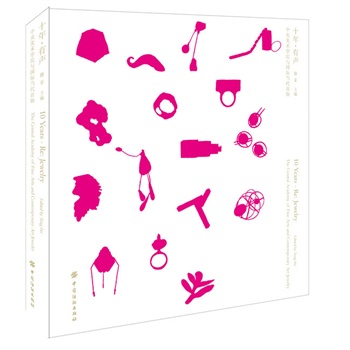 |
| 《十年.有声》 |
| 作者:滕菲 主编 |
| 出版社:中国纺织出版社 |
出版日期:2012/10/1 |
| ISBN:9787506493222 |
定价: 268.00元 |
|
编辑推荐
本书是中央美术学院设计学院首饰设计专业的优秀毕业生作品与当代国际首饰艺术大师作品的一次展示;本书所收录的都是主编精心挑选的倾力之作,旨在推进高水准的首饰艺术、文化的交流与传播,以期读者欣赏到国际首饰艺术文化的精髓。书中较为全面地介绍了欧美首饰艺术的发展与演变,记录了与国际首饰艺术大师进行的访谈交流。本书也意在呈现中国的首饰艺术创作现状以及新一代年轻首饰艺术家的良好创作状态,并藉此让更多世人了解中国首饰艺术。??这是一次具有重大意义的中外首饰艺术的高规格学术交流,也是一次更为贴近社会需求的深入探索。适合首饰设计专业的院校师生阅读,并可作为首饰设计师的参考用书。
内容推荐
本书是中央美术学院设计学院首饰设计专业的优秀毕业生作品与当代国际首饰艺术大师作品的一次展示;本书所收录的都是主编精心挑选的倾力之作,旨在推进高水准的首饰艺术、文化的交流与传播,以期读者欣赏到国际首饰艺术文化的精髓。书中较为全面地介绍了欧美首饰艺术的发展与演变,记录了与国际首饰艺术大师进行的访谈交流。本书也意在呈现中国的首饰艺术创作现状以及新一代年轻首饰艺术家的良好创作状态,并藉此让更多世人了解中国首饰艺术。??这是一次具有重大意义的中外首饰艺术的高规格学术交流,也是一次更为贴近社会需求的深入探索。适合首饰设计专业的院校师生阅读,并可作为首饰设计师的参考用书。
作者简介
滕?菲?中央美术学院教授、硕士生导师、首饰专业创建人、学术主任。第十届全国美展首饰艺术金奖、中国教育部新世纪优秀人才奖,中国美术家协会工艺美术艺委会副主任,中国女画家协会副主席。中国珠宝首饰设计大师称号获得者,首届珠宝首饰设计师协会副主任。1983年毕业于中央美术学院附中,1987年毕业于中央美术学院获学士学位,任教于北京服装学院,1990年赴德国留学,1995年毕业于柏林艺术大学获硕士学位,1995年至今任教于中央美术学院设计学院。多次举办个人作品展和国内外联展,作品被中国美术馆、北京城市规划展览中心、德国汉堡工艺美术博物馆、法国文化艺术中心、奥地利下奥州艺术厅、丹麦阿乎斯博物馆及国内外藏家收藏。作品“梅”系列作为国礼被巴西、美国、法国、葡萄牙、俄罗斯等国总统及夫人收藏。出版多部颇具学术影响力的材料艺术与首饰设计著作。在中国率先提出了首饰设计要为每个个体量身打造的独特理念。策划主持2008年“北京奥运·首饰艺术展”,2007年“从前——中澳首饰艺术展”,2007年“传统工艺的重构——中国当代首饰展”,2002年“国际首饰艺术展”,2002年“未来人类生活方式与首饰”主题研讨会。
目录
序 Preface | 潘公凯 PanGongkai 6
前言 Forword | 王 敏 WangMin 8
十年:心手相传—与滕菲谈教学 10 Years: From Heart To Hand — Teng FeiOn Teaching | 蒋岳红 Jiang YueHong 10
中央美术学院首饰专业毕业生优秀作品 Excellent Graduation Artworks ofCAFA 25
国际当代首饰艺术作品 Contemporary Art Jewelry 175
访谈 Interview | 姜节泓 Jiang Jiehong 260
艺术家简历 Biographies 280
后记 Afterword | 滕 菲 Teng Fei 284
在线试读部分章节
访谈 Interview
伊万?阿斯特弗克
你的作品存在于公认的设计策略与产品界限之外。你认为你的作品是介于“设计”与“艺术”之间呢,还是更接近“艺术”?你对作品的“亲密与激情的投入”为首饰作品营造出一种温度,一种超越佩戴者感知的美学理解。
再来区分“设计”与“艺术”似乎有点过时了。我倒是倾向于将“为他人设计”与始于固有命题、基于当代艺术战略的工作室实践区分开来。我的作品基于我对既定艺术界域与战略的理解,我认为它在积极地重新衡量叙述性投资的同时,也成功地将模糊性与互借性融于视觉比喻与虚拟重估的创作手段中。
另一个要点是,像我这样的作品必须在发展中的叙事性首饰传统背景中进行解读。作为首饰实践的一个发展方向,叙事性首饰源于首饰本身与其意义之间的关系。一件首饰作品不仅仅是一件有价值的工艺品,其美感与材质都可计量—这些可被诠释为作品的“确切”价值,所谓确切的概念客观地出于作品固有属性。在叙事性首饰中材质本身并不重要—它的价值在于发现其情感上和心理上的投资。
这促成我使用那些有激发感情并富有叙事潜质的现成品,改造物,或所谓重新发现的物件和复制品,这些都可以激发一种“被寻见感”,特别是当作品带有强烈的私人主观心理经验和精神创伤。我的目的是重组这些物质以达成一种无意识的表象,并使用隐喻性来突出其象征性,从而使感情投资有益于创造性的表述和再现—这是一种制造遗迹的当代实践手法,将虚拟的感情投资奉于高阁。
我很喜欢你将首饰作品作为“身体与世界相遇之处”的理解。而首饰在这个相遇之处又扮演了一个什么样的角色—比如一个翻译者,向世界定义与诠释身体,还是一个讲故事的,将“你的世界”用物件的语言告知那个身体?
首饰实践为艺术与文化产品的话语带来截然不同的对制造、技术运用与物质转换之间关系的感悟,将其带入观念性思考与当代批评中去。
我的作品拓展了传统的可佩戴装饰性物体的形式,对话性地直指身体—无论当它在展览中缺失,或是佩戴时在场,成为对身体反思式的再现。由于物理制作的本性,我们可以认为作品始终暗示着身体的在场。无论最终成为哪个层面上的文化产物,手工艺品(以及那些手工与机械制作结合的作品)都带有身体介入的痕迹。然而,我所感兴趣的是当那些与身体有关的物件成为一个地方,或是与一个地方相关的概念,在那里,所有的故事被用来填补空缺、并与种种复杂、混乱或冲突相谋和交涉。
Jivan ASTFALCK
Your work exists outside the margins of recognised design products.Do you see your work as being between ‘design’ and ‘art’, or closerto ‘art’? The sense of intimacy and your own passionate investmentin your work create a kind of ‘temperature’ for these jewellerypieces, that exists beyond an aesthetic understanding for thewearer.
‘Design’ and ‘Art’ are outdated and redundant concepts; I prefer todifferentiate between ‘designing for others’ and studio practicewhich is motivated by an inherent enquiry and is informed bycontemporary art strategies. While my work is informed by myunderstanding of already mapped out artistic territories andstrategies, it actively re-evaluates narrative investments and, inmy view, succeeds in embedding ambiguity and cross-referencing interms of the creative construction of visual metaphors andfictional reassessment.
Furthermore and significantly, work such as mine must beunderstood within the context of a developing tradition ofnarrative jewellery. As a strand of jewellery making practice,narrative jewellery takes as one of its starting points therelationship between jewellery objects and meaning. A work ofjewellery is not only a valuable object in terms of its craft,beauty, and materially quantifiable worth—all of which might betranslated as ‘proper’ values—proper in the sense of belonging tothe object itself, objectively as its own properties. Withinnarrative jewellery the object is acknowledged, and in factembraced, as an object of non-proper values, values which findtheir source in emotional and psychologicalinvestments.
This led me to engage with the potential of cross-referencing inevocative and richly narrative found ready-mades, adapted andmodified, so to speak, re-found pieces and replicas that simulate‘foundness’… especially if the pieces have a strong reference tohistorical trauma in relation to private and subjective mentalexperience. My aim is to re-configure these pieces to achieve animagery of the unconscious and address symbolisation by usingmetaphoricity to cross-map emotional investments conducive to newcreative articulation and representation—a contemporary practice ofmaking reliquia… enshrining fictionalised emotionalinvestment.
I appreciate your understanding of jewellery pieces to ‘map out thedemarcation lines, where body meets world’. How do you see thevariety of roles of jewellery in this meeting—a translator, forexample, defining and interpreting the body to world, or really astoryteller, introducing ‘your world’ through the language of theobjects to a body?
Jewellery practice brings to art and the discourse of culturalproduction a distinct sensibility of the relationship betweenmaking activity, application of skill and the transformation ofmaterials, to conceptual considerations and contemporarycriticality.
The work extends the traditional format of the wearable decorativeobject and refers dialogically to the body, either in its absencewhen exhibited, directly when actually worn or as a representationof a reflected enquiry about the body. One could argue that thebody is always implied because of the physical nature of making.The hand-made crafts object (and those where a technologicalapplication has been used in a combination with the hand-made)carry the traces of the body’s involvement, regardless of on whichlevel of cultural production they are subsequently disseminated.However, I am interested in those body-related objects. They becomea place, or idea of a place, where narratives are invested inbody-related objects with the aim to negotiate that gap,complexity, confusion, or conflict.
Thinking takes place in making, but my making signifies bodies allthe same; despite thinking through the mediated layers of culture,history, and theory we are grounded in the physical—in our visceralsensations, like pain or desire, in our longings, fears, and ourknowledge of the transience of bodily existence. Making narrativework that maps out the demarcation lines where body meets worldhappens at the node between complex referential networks, inbetween the physical world of making and the world of ideas,thought and language. My conceptualisation of the body exists inthe many facets of the in-between, at a place where we createourselves as individual subjects with distinct identities and wherethe activity of self-creation is attuned more to its ambiguitiesrather than its certainties, knowing quite well that the activityof self-creation is fraught with disappointment, porous andevasive.
Jack CUNNINGHAM
If I see your work within the context of narrative, in a sense, avisual representation of ‘collections’, they often appear naturallyas a collection of various objects, or, seem to be made as an‘object assembly’. Those collected, or made, either related or not,were brought together to contextualise a new definition. There isan interesting ambiguity of ‘making’ and ‘collecting’, or are theyin fact, to you, the same, as practical approaches of visualreflection?
|
|
|